A circular economy is a way of designing systems so materials don't follow a straight line from use → waste, but instead move in a continuous loop of use → return → regenerate.
Instead of extracting resources, using them briefly, and discarding them, circular systems aim to:
In practice, it asks a different kind of question: not just "what are we making?" but "what happens after we're done?"
This thinking, championed by the Ellen MacArthur Foundation, has influenced how industries — from fashion to food to design — rethink waste, responsibility, and production.
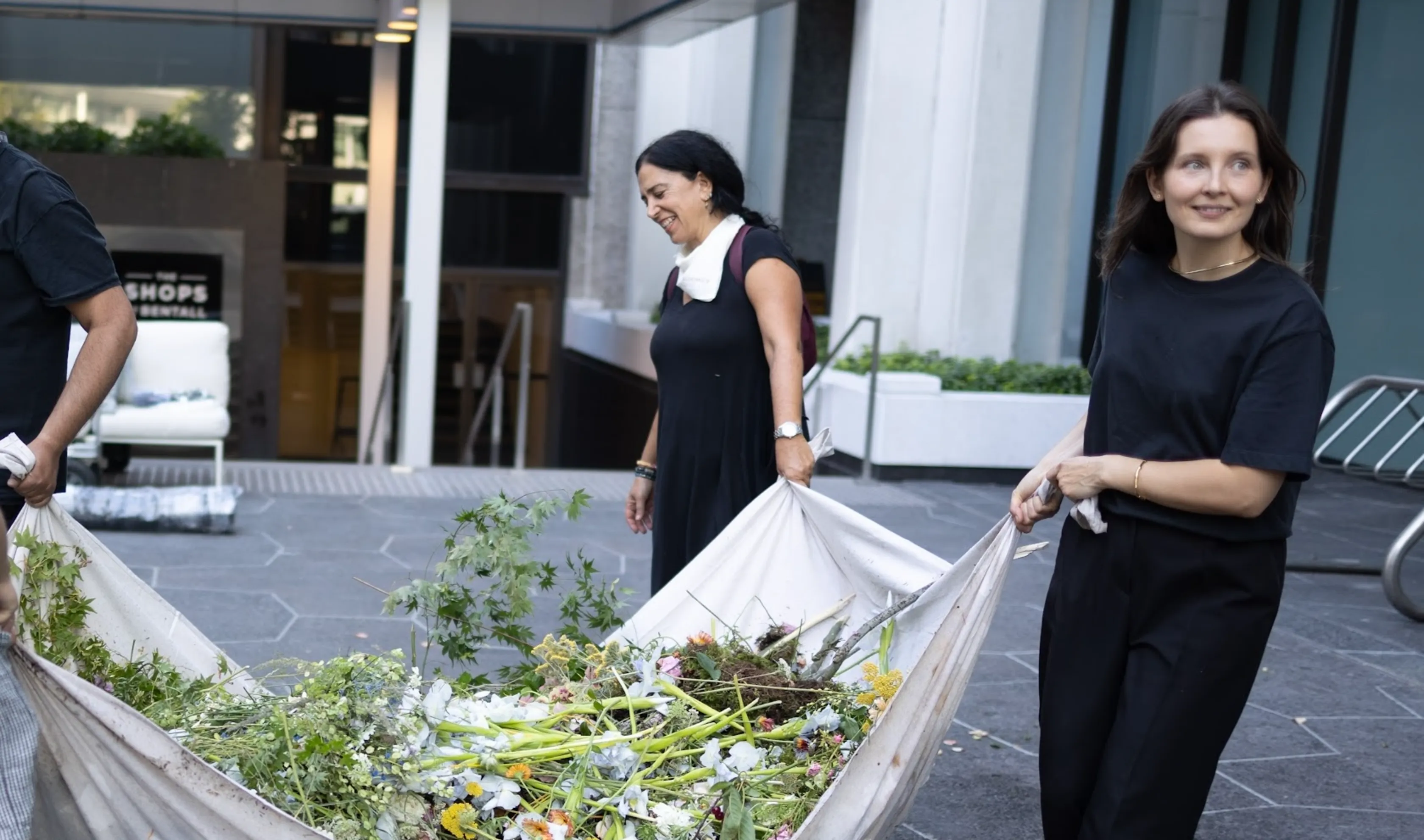
Growing from the earth and being used to restore soil back in the earth, our floral studio operates out of a circular business model with sustainability as its foundation. Committing to breaking the cycle of waste, and creating this circle, meant refusing some of the traditional models of running a flower company.
In practice, this means we design with what happens after in mind: flowers are not treated as disposable decoration, but as part of a living system that continues beyond a single moment.
It also means making different choices from conventional floristry: working with materials and mechanics that can be reused, designing with end-of-life in mind, and ensuring organic matter is returned to the earth rather than discarded.
For us, circularity is not a concept applied after the fact. It is the starting point of how we design, build, and think.
A handful of the choices that shape every arrangement, installation, and event we make.
We continue evolving our methods through research, education, and collaboration.
Work with us